









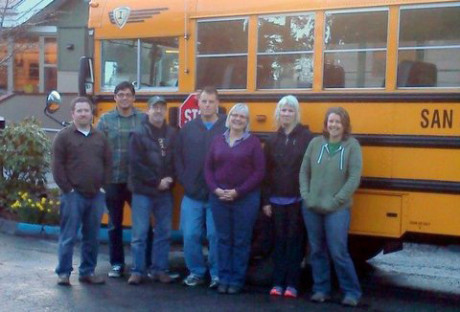
Bus drivers (and some subs) include, left to right: Joel Swartz (sub), Joe Gamez, Bill Cumming (sub), Mike Erickson, Kris DayVincent, Po Powell & Kim Ryan. Not pictured, Mary Elford – Terresa Sundstrom photo
SJISD School Buses are rated Safe and 100% efficient
San Juan Island school buses have been awarded a Certificate of Achievement from the Washington State Patrol for outstanding school bus safety inspections and have been rated 100% efficient by the Office of the Superintendent of Public Instruction (OSPI) for school year 2012-13,
OSPI’s “Efficiency Rating” is one component that the state uses to determine reimbursable funding for transporting students to and from school.
Data is gathered though a routine ridership survey that generates a student transportation allocation report, based on the number of school bus riders, the land area covered, road miles driven and the size of the buses that are used.
On San Juan Island, six school buses transport 490 “basic” student riders and 19 special needs student riders to and from school every day from all corners of San Juan Island.
“The Transportation crew is very proud of their record.” said District Transportation Supervisor Terresa Sundstrom, “And they should be. They are very professional and conscientious.”
The school district is very proud of this accomplishment.






 Are you a weather fanatic? Want to help the National Weather Service with observations and data collection? Check out this free training.
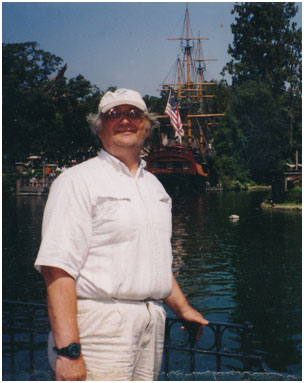 In honor of the recently departed Chris DeStaffany, friends are invited to convene at the San Juan Community Theatre around two o’clock in the afternoon on Saturday, March 22nd for quiet remembrance, progressing from there to the Rumor Mill about three or three-thirty for a properly boisterous wake where beverages will be available and you may, if you wish, bring a favorite dish to share.
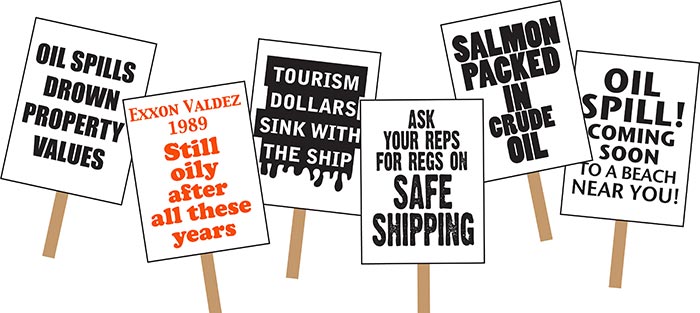
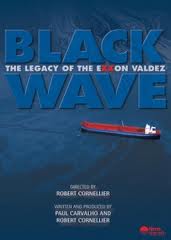 On March 24, 1989, the Exxon Valdez oil supertanker ran aground in Alaska, discharging millions of gallons of crude oil and thus becoming the biggest environmental catastrophe in North American history. It didn’t take long before dramatic images appeared across the world: thousands of carcasses of dead seabirds and sea otters covered in oil, a thick black tide rising and covering the beaches of once-pristine Prince William Sound. For the next 20 years, marine toxicologist Riki Ott and the fishermen of the little town of Cordova, Alaska, waged the longest legal battle in U.S. history against ExxonMobil, the world’s most powerful oil company. In this compelling documentary, we learn about the environmental, social and economic consequences of the black wave that changed the lives of thousands of people forever.